
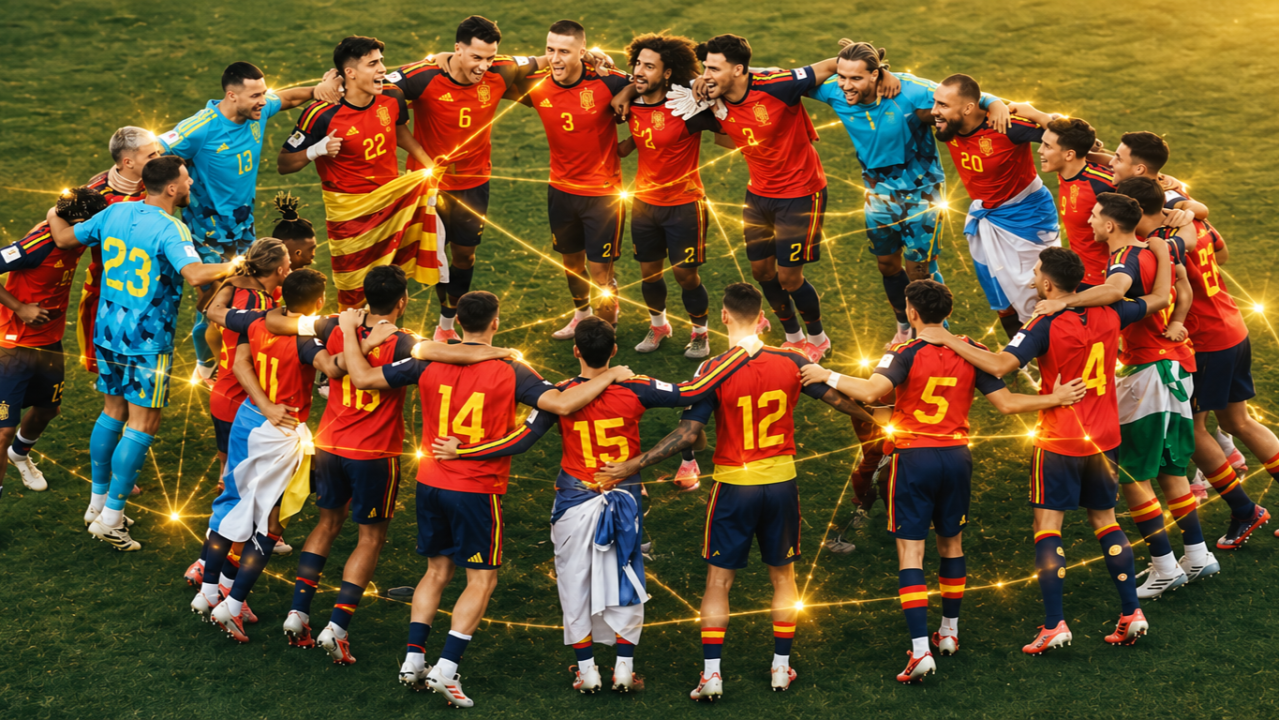
Our house was divided long before the final. My son follows the French talent, my daughter has a soft spot for the Scandinavian teams, my wife supports Spain because half our friends and colleagues are Spanish.
I wanted Spain to win, and not for any of those reasons.
I have spent twenty years working on how organisations hold on to what they know. So I was not watching a final that night. I was watching two theories of success play each other, and I badly wanted one of them to hold.
Argentina's theory is the one most of us secretly believe in: find someone extraordinary and let them decide the night. Spain's theory is slower and far less romantic. Teach the same ideas to everyone for years, at youth level and senior level, until nobody has to be told what to do.
Argentina came at them hard: physical, direct, trying to break the rhythm and force a mistake. It is a good strategy against a team that improvises.
Spain didn't improvise. What struck me was how little visible communication there was. Nobody shouting instructions, nobody reorganising anything. Everyone already knew where everyone else would be. My wife asked, around the hour mark, why nobody was doing anything spectacular. That was the point. Nobody needed to.
Remove one Spanish player and the shape held. Remove Argentina's best and the theory collapses. That difference is not luck. It is twelve years of the same knowledge being passed to the next group, and the next.
I have watched organisations lose that same match. Not on a pitch, but in a meeting room, eighteen months after someone resigned. You know the person: Tom. The one who knows why the framework was designed that way, who remembers what was agreed with the regulator in 2019 etc etc. They are not listed anywhere as critical infrastructure. They just are.
Three things worth doing before that Tuesday:
Write down why, not just what. Most decision records confirm something was approved. Almost none explain what made it sensible at the time.
Name your single points of knowledge. If this person were unavailable for three months, what stops? Most teams have never made that list.
Debrief the near-misses. They hold the most useful knowledge and the least defensiveness.
Knowledge Management is not about producing heroes. It is about building organisations that can afford to lose them.
Every organisation loses its best people eventually.
_____________________________________________________



.png)
.png)
.png)
.png)